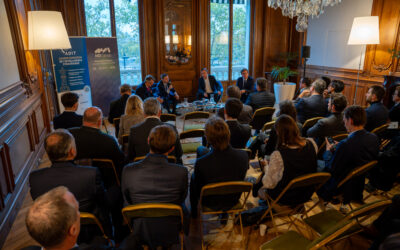
In late August, the grounds of Roland-Garros (the French Open) buzzed with an unprecedented sense of urgency. On the courts usually dedicated to celebrating individual athletic achievements, the REF (Rencontre des Entrepreneurs de France/Meeting of France’s Entrepreneurs) set up a whole new match around the theme of “Courage”, the courage to produce, invest, decide, and confront our vulnerabilities head-on.
Under the summer tents, discussions took a sharp turn. One persistent question dominated the room: how can we keep producing and investing when energy, raw materials, tech, and supply chains have turned into instruments of global power? Our view on global trade has become far more pragmatic, but above all, our definition of sovereignty has shifted. We have moved from a mindset of expansion to a culture of resilience. Just months ahead of the 2027 presidential election, the business community sent a loud and clear message to candidates: France can no longer afford grand speeches about its power; it must urgently reduce its vulnerabilities.
A Structurally Hostile Global Environment
For decades, economic sovereignty was about building national champions and capturing market share. Geopolitical hazards were treated as rare, fringe events.
Those days are gone. Globalization did not suddenly turn into a power struggle—it always was one. But Europe is finally facing reality. International trade is now openly weaponized as political leverage, whether through leverage over gas supplies or rare earth metals, economic sanctions, or strict controls on critical technologies.
Amid American and Chinese protectionism, along with high tensions across key shipping routes, the traditional framework of trade has collapsed. Remarks by DGSI Director General Céline Berthon, Chief of the Defense Staff Fabien Mandon, and Dassault Aviation CEO Eric Trappier drove home a sobering point: the line between economics and national security has vanished.
A French factory can be forced to shut down overnight by a bottleneck in a maritime strait, a targeted embargo on electronic chips, or a sudden spike in energy costs. The corporate operating environment has hardened dramatically: business leaders now fight daily battles against aggressive geopolitical shifts completely beyond their control.
In this climate, the meaning of sovereignty has fundamentally shifted. The goal is not to isolate ourselves from the rest of the world, but to mitigate our exposure. Being sovereign means ensuring no foreign power can paralyze our economy overnight.
Securing Our Assets Over Manufacturing Everything Locally
During the session “Produce or Perish?,” the REF raised a fundamental question: do we still want to manufacture in France and Europe? Production demands competitive energy prices, skilled talent, solid infrastructure, and regulatory timelines aligned with business investments.
While industrial sovereignty is built inside factories, labs, ports, power grids, and data centers, it also hinges on our ability to recycle more effectively. Discussions on the circular economy highlighted that a raw material recovered within Europe can serve as a tool for sovereignty just as effectively as a brand-new production facility.
France still holds major advantages. It benefits from largely decarbonized power generation and reliable baseload capacity. It boasts world-class engineers and researchers, strong export companies, and innovative industrial sectors. Yet these strengths will only pay off if we commit them to a coherent strategy.
Full reshoring is neither realistic nor desirable. The real focus lies elsewhere: diversifying suppliers, securing critical supply chains, scaling up European capabilities where it makes sense, and forging strong partnerships with trusted nations. A winning strategy requires intentionally selecting and diversifying our dependencies rather than suffering through them. It is the only viable path today to safeguard access to critical minerals, semiconductors, and essential pharmaceutical ingredients.
What the Business World Expects from Presidential Candidates
Faced with such high geopolitical stakes, businesses cannot stand alone. This is where the REF’s appeal to policymakers hits home. Hearings and debates with leading political figures made one thing clear: business leaders no longer expect the government to act as a mere subsidy distributor. The fiscal limits of “whatever it takes” spending have been reached.
What companies want is a strategic state partner and ally. Future leaders must deliver a clear-eyed, proactive economic diplomacy. That means driving firm bilateral agreements to secure raw material supplies. It requires unapologetic protectionism along EU borders, backed by strict mirror clauses and robust legal measures to block foreign interference. Political leaders must build a secure, predictable environment for our industry.
The real political courage of 2027 will mean leveraging our core strengths to stay fully integrated into global commerce, while equipping ourselves with the legal, industrial, and diplomatic tools to stop letting others dictate the rules of the game.
Creating a European agency dedicated to securing critical resources, empowered to negotiate long-term supply contracts, manage shared strategic stockpiles, and align diplomacy directly with industrial priorities—would mark a powerful step forward.
It is now up to political leaders to elevate our foreign policy to meet the challenges of the century.
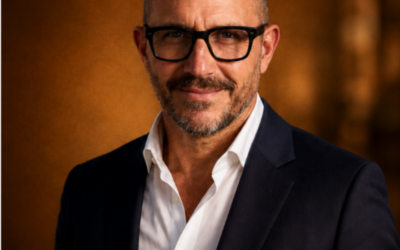
By Cécile Delique